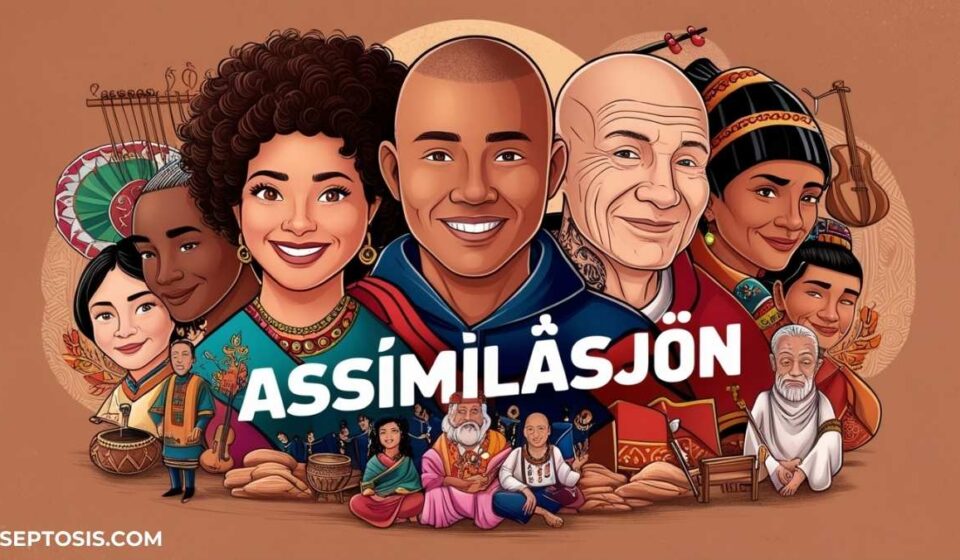

Introduction to Assimilasjon
Imagine moving to a completely new country where everything feels unfamiliar—different language, food, traditions, and social rules. Over time, you slowly start adapting to these changes. You learn the language, follow local customs, and become part of the community. This process is known as assimilasjon.
The term assimilasjon refers to the process through which individuals or groups adopt the cultural traits, language, and social behaviors of another society, often the dominant one. In many cases, it occurs when immigrants or minority communities adjust to the norms of the majority population. This transformation can happen gradually and sometimes over multiple generations.
Understanding assimilasjon is essential because it helps explain how societies evolve and how different cultures interact with each other. Whether in sociology, linguistics, or psychology, the concept plays a key role in describing how humans adapt to new environments and integrate into broader communities. In this article we will explore the meaning of assimilasjon, its types, real-life examples, advantages, and challenges.
What Does Assimilasjon Mean?
Definition of Assimilasjon
At its core, assimilasjon simply means “becoming similar.” In social and cultural contexts, it describes a process in which individuals or groups adopt the customs, values, language, and behaviors of another group, often the majority culture. For example, immigrants who move to a new country may gradually adopt the local language, social norms, and lifestyle in order to fit into their new society.
This process does not usually happen overnight. Instead, it unfolds slowly through daily interactions, education, work environments, and community involvement. Children of immigrants often experience assimilation faster than their parents because they grow up within the local school system and social environment.
Assimilasjon can also occur in many areas beyond culture. In linguistics, it refers to the way speech sounds influence each other during pronunciation. In psychology, it refers to how people incorporate new experiences into their existing understanding of the world. These different meanings share a common idea: adaptation and transformation.
In modern societies, assimilation often sparks debates. Some people see it as necessary for social harmony, while others believe it can threaten cultural diversity. This balance between adaptation and identity makes assimilasjon a complex and fascinating concept.
Origin and Etymology
The word assimilasjon originates from the Latin term assimilare, which means “to make similar” or “to become alike.” Over centuries, the concept spread across multiple academic disciplines including sociology, anthropology, linguistics, and psychology.
Historically, the term became widely used during periods of large-scale migration in Europe and North America. Governments and scholars began studying how newcomers adapted to new societies. During these discussions, assimilation was often viewed as the final stage of cultural adaptation, where minority groups fully adopt the identity of the majority culture.
In Scandinavian countries, including Norway, the concept of assimilasjon has also been connected to policy discussions about immigration and cultural identity. It is sometimes contrasted with integration, which allows individuals to maintain aspects of their original culture while still participating in the broader society.
The evolution of the word shows how societies have continuously redefined what it means to belong. While its basic meaning remains “becoming similar,” the social implications of assimilation continue to change depending on cultural and political perspectives.
Types of Assimilasjon
Cultural Assimilasjon
One of the most widely discussed forms is cultural assimilasjon. This happens when individuals or groups adopt the traditions, language, and lifestyle of a dominant culture. It is especially common in societies experiencing immigration.
Imagine a family moving to a new country. At first, they may speak their native language at home, follow traditional customs, and maintain their cultural identity. Over time, however, they may begin speaking the local language more frequently, celebrating local holidays, and adopting local habits. Eventually, their daily life may closely resemble that of the majority population.
Cultural assimilation often occurs across generations. The first generation might retain strong ties to their original culture, while the second or third generation becomes more closely aligned with the new society. This gradual shift demonstrates how assimilation is not a single event but an ongoing process.
Despite its benefits, cultural assimilation also raises concerns. Some critics argue that it can lead to the loss of cultural heritage and traditions. Others believe it promotes unity and social cohesion by creating shared values and communication.
Linguistic Assimilasjon
In linguistics, assimilasjon refers to how speech sounds change when they interact with neighboring sounds. During natural speech, the human vocal system constantly adjusts, causing certain sounds to become more similar to nearby ones.
For example, in historical language development, some sounds changed because of assimilation processes. In Old Norse, the word vatn eventually became vann in modern Norwegian due to sound changes influenced by neighboring sounds.
Linguistic assimilation happens in everyday speech as well. When people speak quickly, certain sounds merge or influence each other, making pronunciation easier and smoother. This phenomenon is called coarticulation, where the mouth and vocal organs move continuously during speech.
Understanding linguistic assimilation helps linguists analyze language evolution and pronunciation patterns. It also explains why spoken language often differs from written language.
Psychological Assimilasjon
In psychology, assimilation is associated with learning and cognitive development. According to theories of child development, individuals process new experiences by fitting them into existing mental frameworks.
For example, a child who already understands the concept of animals might see a zebra for the first time and categorize it as a type of horse. This is assimilation—the brain interpreting new information using existing knowledge structures.
Psychological assimilation also occurs in social perception. People sometimes assume individuals from unfamiliar groups share similar traits, even when they do not. This cognitive shortcut can help people quickly process information, but it can also lead to stereotypes or misunderstandings.
Psychologists study assimilation to understand how humans learn, adapt, and form beliefs about the world around them. It shows that assimilation is not only a social phenomenon but also a mental process that shapes perception and learning.
Assimilasjon vs Integration
Key Differences
The terms assimilation and integration are often used interchangeably, but they actually describe different processes. Understanding the difference is crucial when discussing immigration, multicultural societies, and social policies.
| Aspect | Assimilasjon | Integration |
|---|---|---|
| Cultural Identity | Minority culture often fades | Cultural identity remains |
| Social Adaptation | Full adoption of majority culture | Coexistence of multiple cultures |
| Goal | Cultural uniformity | Cultural diversity with participation |
| Social Outcome | Homogeneous society | Multicultural society |
In assimilation, minority groups gradually adopt the customs, values, and language of the dominant culture until differences become minimal. Integration, on the other hand, allows people to maintain their original culture while still participating fully in society.
Many modern countries prefer integration over assimilation because it supports diversity and inclusion. However, some level of assimilation—such as learning the national language—is often necessary for effective communication and participation in society.
Historical Background of Assimilasjon
Assimilasjon in Europe
Throughout history, assimilation has played a major role in shaping European societies. During periods of migration, conquest, and political expansion, dominant cultures often influenced minority groups. Over time, languages merged, traditions evolved, and communities adapted to new social structures.
One example is the assimilation of regional cultures within expanding nation-states. As countries formed unified national identities, minority languages and traditions sometimes faded in favor of a shared national culture. This process often involved education systems, government policies, and media promoting a common language and identity.
In some cases, assimilation was voluntary. People adopted the dominant culture because it offered economic opportunities and social acceptance. In other cases, assimilation was enforced through policies designed to reduce cultural differences.
These historical examples show how assimilation can shape societies over long periods, influencing language, identity, and cultural traditions.
Assimilasjon in Modern Global Society
In today’s interconnected world, assimilasjon has become more complex than ever. Globalization allows people to maintain ties with their original culture even while living in a different country. Technology, social media, and international communication make it easier to stay connected with cultural roots.
Because of this, modern assimilation often looks different from historical models. Instead of completely abandoning their cultural identity, many people adopt a hybrid identity that blends elements from multiple cultures.
Cities around the world now function as multicultural hubs where languages, foods, traditions, and lifestyles coexist. While assimilation still occurs, it often happens alongside integration and cultural exchange.
This evolving dynamic shows that assimilation is not disappearing—it is simply adapting to the realities of a more connected world.
How the Assimilasjon Process Works
Major Stages of Assimilasjon
The process of assimilation usually develops through several stages. Although every individual experience is different, many researchers describe a similar progression.
Common stages include:
- Initial Contact – A person or group enters a new cultural environment.
- Adaptation – Learning basic social norms and language.
- Participation – Becoming involved in education, work, and community life.
- Identification – Feeling emotionally connected to the new culture.
Adaptation
During the adaptation stage, individuals begin learning the cultural rules and expectations of their new society. They may study the language, observe social customs, and adjust their behavior to fit local norms.
Cultural Adoption
Eventually, individuals start adopting aspects of the dominant culture naturally. This might include communication styles, clothing preferences, entertainment choices, or social traditions.
Assimilation becomes more complete when these changes feel natural rather than forced.
Advantages of Assimilasjon
Assimilation can provide several benefits for individuals and societies. For newcomers, adapting to the dominant culture often improves communication, job opportunities, and social acceptance. Learning the language and customs of a country helps individuals navigate daily life more easily and build stronger relationships.
For societies, assimilation can strengthen social cohesion. Shared language and cultural norms make communication smoother and reduce misunderstandings between different groups.
Another advantage is economic integration. When immigrants assimilate into the workforce and education system, they contribute to economic growth and innovation.
Still, these benefits depend on how assimilation occurs. When the process is voluntary and respectful of individual identity, it can create strong, inclusive communities.
Challenges and Criticism of Assimilasjon
Despite its benefits, assimilation is often criticized for encouraging cultural loss. When minority groups fully adopt the dominant culture, traditional languages, customs, and identities may gradually disappear.
Critics argue that societies should value diversity rather than expect everyone to become culturally identical. They believe multiculturalism allows communities to maintain their heritage while still participating in broader society.
Assimilation can also create pressure on immigrants to abandon aspects of their identity in order to be accepted. This pressure may lead to feelings of isolation or cultural conflict.
Because of these concerns, many modern societies focus on integration rather than strict assimilation. The goal is to build inclusive communities where cultural differences are respected rather than erased.
Real-World Examples of Assimilasjon
Assimilation occurs all around the world in different forms. One common example is language adoption. Immigrants who move to a new country often learn the national language to communicate in workplaces, schools, and public life.
Another example is generational cultural change. Children of immigrants frequently adopt the cultural norms of their new country while maintaining some elements of their parents’ heritage.
Food culture also illustrates assimilation. Over time, immigrant communities may adapt traditional recipes using local ingredients or blend culinary traditions from different cultures. This fusion creates new cultural expressions that reflect both heritage and adaptation.
These everyday examples show that assimilation is not always dramatic or controversial. Often, it occurs quietly through daily life and social interaction.
The Future of Assimilasjon in a Globalized World
As globalization continues to connect societies, the concept of assimilation will likely keep evolving. Migration, international travel, and digital communication allow cultures to interact more than ever before.
Instead of a one-way process where minorities adopt the dominant culture, modern assimilation often involves mutual influence. Host societies may adopt elements of immigrant cultures, creating new hybrid traditions.
This shift suggests that assimilation in the future may focus less on cultural replacement and more on cultural exchange. The result could be societies that are both cohesive and diverse.
Understanding this evolving concept will be essential for policymakers, educators, and communities seeking to build inclusive societies.
Conclusion
Assimilasjon is a powerful concept that helps explain how cultures interact, adapt, and evolve. Whether in sociology, linguistics, or psychology, it describes the process of becoming similar to something else through adaptation and transformation.
In social contexts, assimilation often occurs when individuals or groups adopt the language, customs, and values of a dominant culture. While this process can promote social unity and economic opportunity, it also raises questions about cultural identity and diversity.
The modern world is increasingly interconnected, meaning assimilation is no longer a simple one-way process. Instead, cultures influence each other in complex and dynamic ways.
Understanding assimilasjon allows us to appreciate how societies change over time and how individuals navigate cultural transitions. Exploring this topic also encourages deeper discussions about identity, diversity, and belonging in an increasingly globalized world.
FAQs
1. What does assimilasjon mean?
Assimilasjon means the process by which individuals or groups adopt the cultural, social, or linguistic traits of another group, often the dominant culture.
2. Is assimilasjon the same as integration?
No. Assimilation involves adopting the dominant culture almost completely, while integration allows people to keep their original cultural identity while participating in society.
3. Where is assimilasjon used as a concept?
The concept is used in sociology, linguistics, psychology, anthropology, and cultural studies to explain how people adapt to new environments.
4. What is linguistic assimilasjon?
Linguistic assimilation refers to a phonetic process where one speech sound becomes similar to another because of their proximity in speech.
5. Why is assimilasjon controversial?
Assimilation can be controversial because it may lead to the loss of cultural identity and traditions, especially when minority groups feel pressured to abandon their heritage.