
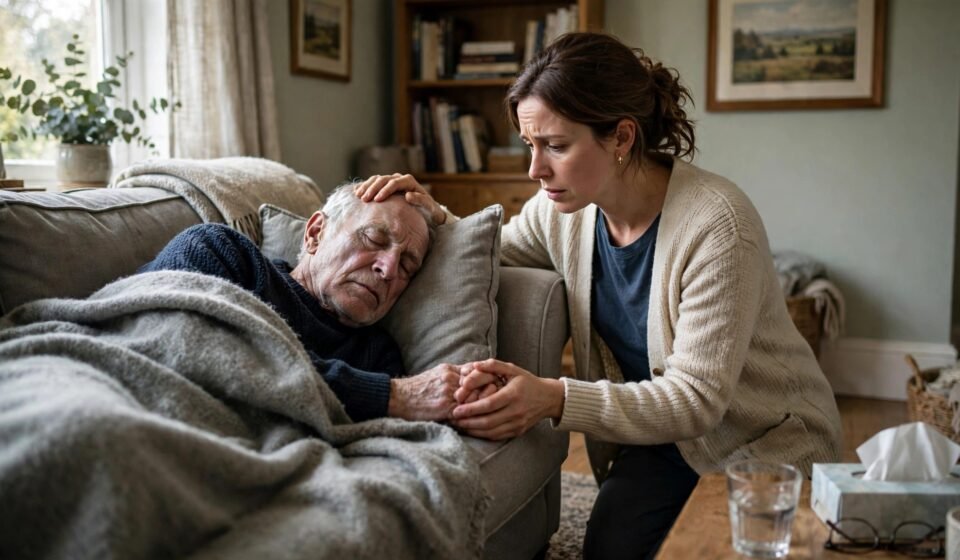

Sepsis can start quietly. At first, it can look like flu, a chest infection or a tummy bug. However, within hours it can become life-threatening. That is why knowing the early signs of sepsis matters so much.
Sepsis always starts with an infection. Any infection can trigger it, from flu to an infected cut. The body’s immune system overreacts, and that overreaction begins to harm the body itself. That is what makes sepsis different from a normal infection, and it is also what makes speed so important.
Sepsis happens when the body’s response to an infection starts to damage its own organs. It was once called septicaemia, or blood poisoning. The World Health Organization estimates 48.9 million cases a year worldwide, with 11 million deaths. In the UK alone, the UK Sepsis Trust says sepsis affects around 245,000 people a year and claims around 48,000 lives. Indeed, the Trust says five people die of sepsis every hour in the UK.
The hopeful news is simple: sepsis can be treated, and treatment works best when it starts early. So the sooner you spot the signs, the better the chance of recovery. This guide explains the first symptoms to watch for, and it explains what to do the moment you see them.
Please note: this page gives general information only, and it is not medical advice. If you think you or someone you care for has these symptoms, treat it as an emergency. Get urgent medical help straight away.
The earliest signs of sepsis
First, remember that sepsis follows an infection. For example, it can follow a chest infection, a urine infection, flu or an infected cut. The first signs are often subtle, so families often notice a change before they can name it. Some signs are easy to spot, while others are feelings that only the ill person can describe. Look out for these warning signs:
- Feeling very unwell, or feeling that something is seriously wrong
- New confusion, muddled thinking or slurred speech
- Breathing faster than usual, or feeling breathless
- Skin that looks mottled, blotchy, pale, blue or grey
- Not passing urine all day, or passing very little
- Extreme shivering, or severe muscle pain
- A high temperature, or an unusually low temperature
- A strong feeling that you might die
Also, trust your instincts. The NHS urges people to seek help when someone is unwell and something feels seriously wrong, even when you cannot explain why. In fact, a person with sepsis may not have every sign on this list. One or two signs in someone with an infection are enough reason to act.
However, fever alone does not confirm sepsis, and some people never develop a fever at all. Older adults, for example, often do not get a high temperature. Because of this, the pattern matters more than any single symptom. What matters most is an infection plus a sudden turn for the worse.
One more detail helps many families: on black or brown skin, colour changes can be hard to see. Instead, check the palms of the hands or the soles of the feet, as the NHS advises. The lips and tongue can also look pale, blue or grey.
These signs do not arrive in a set order. For instance, one person may become confused first, while another starts with severe shivering. Meanwhile, a young child may simply go quiet and lose interest in playing or feeding. Whatever the order, a sudden change in someone with an infection is the signal to act.
How the early signs differ by age
The signs change with age, so it helps to know what to look for in each group.
Early signs in adults
In adults, the classic early signs are confusion or slurred speech, uncontrollable shivering and muscle pain. Adults may also breathe fast, look blotchy or pale, and pass no urine all day. In addition, many adults describe a frightening sense that something is very wrong, even before they can say what it is. Slurred speech can sound like simple tiredness at first, so take it seriously in someone with an infection.
Early signs in children
Children often breathe very fast first. They may also have a fit, look mottled, bluish or pale, and feel abnormally cold to touch. A rash that does not fade when you press it is another danger sign. Meanwhile, a child with sepsis may be very sleepy, hard to wake, or simply not themselves. Children under five may also refuse feeds or keep being sick, and those changes count too.
Early signs in babies
Babies cannot tell you how they feel, so behaviour matters most. Watch for a weak, high-pitched cry, poor feeding, repeated vomiting and fewer wet nappies than usual. A baby who has not had a wet nappy for 12 hours needs urgent help. Also, a temperature of 38°C or more in a baby under three months old is always a reason to seek help at once. A baby with sepsis may also feel abnormally cold to touch.
The SEPSIS acronym: an easy way to remember
The UK Sepsis Trust sums up the six key adult signs in one word: SEPSIS. Each letter stands for one warning sign.
- S — Slurred speech or confusion
- E — Extreme shivering or muscle pain
- P — Passing no urine in a day
- S — Severe breathlessness
- I — It feels like you’re going to die
- S — Skin mottled or discoloured
If an adult with an infection shows even one of these signs, treat it as an emergency. Do not wait for the full set to appear, because sepsis rarely shows every sign at once.
You do not need to memorise the list perfectly. Instead, remember the idea behind it: a person with an infection who suddenly seems far more unwell than expected. If that is what you see, make the call.
Who is most at risk of sepsis?
Anyone with an infection can develop sepsis. However, some people face a higher risk, so families should watch them more closely:
- Babies under 12 months old
- People over 75, or people who are very frail
- People with a weakened immune system, for example during chemotherapy
- People with long-term conditions such as diabetes
- Women who are pregnant, or who gave birth in the past six weeks
- People with a recent wound, burn, operation or catheter
The type of infection matters too. According to the NHS, chest infections and urine infections are among the most common starting points. Because of this, a “simple” infection in a high-risk person should never be ignored if they suddenly get worse.
Other infections can be the starting point too. For example, the NHS lists infections in the tummy, such as appendicitis, and skin infections, such as cellulitis or an infected wound. In other words, almost any infection can lead to sepsis, so the person’s change matters more than the infection’s name.
When to get help now
Sepsis is an emergency, full stop. If you spot any of the early signs of sepsis in someone with an infection, call 999 or go straight to A&E. Do not wait until morning, and do not wait to see how it goes.
The NHS also gives clear practical advice: do not drive yourself to A&E. Instead, ask someone else to drive you, or call 999 and ask for an ambulance. Then, if you can, tell the call handler or hospital team exactly what you have noticed, and ask one simple question: “Could it be sepsis?”
Finally, act even if you feel unsure. Nobody will criticise you for seeking help early. In fact, hospital teams would far rather check someone early than treat them late.
If you are worried about an infection but none of the danger signs are there yet, get advice the same day from NHS 111 or a GP. Then keep watching closely, because sepsis can develop over a few hours. If any danger sign appears, switch straight to 999.
What happens at hospital
At hospital, the team will act fast. Sepsis is treated in hospital, and the NHS is clear that it needs urgent treatment there. First, they check breathing, blood pressure and temperature, and they take blood tests. Then, when sepsis is suspected, UK hospitals aim to deliver a set of six steps, called the Sepsis Six, within the first hour:
- Oxygen, if it is needed
- Blood cultures, to help find the infection
- Antibiotics given into a vein
- Fluids given into a vein
- A blood test for lactate, which shows how well the organs are coping
- Careful checks of urine output
After that, the team keeps monitoring the person closely. Some people also need care in a specialist unit, where staff can watch them around the clock. In short, the first hour matters, which is why arriving early makes such a difference.
You can help the team too. Tell them when the symptoms started, which infection came first, and which medicines the person takes. The NHS advises people to bring their medicines with them. Staff will also look for the source of the infection, so treatment can target it more precisely.
Why the early signs are so easy to miss
Early sepsis often looks like an ordinary illness. In its early stages, it can be mistaken for flu, a chest infection or an upset stomach, as the UK Sepsis Trust explains. Fever, shivering and aching muscles all feel familiar, so people understandably choose rest and paracetamol instead.
However, a normal infection usually improves or stays much the same, while sepsis makes a person rapidly worse. That difference is the key. Our guide to sepsis vs infection explains how to tell the two apart in more detail. Above all, watch the trend: if someone with an infection is clearly going downhill, treat the change itself as a warning sign.
Spotting sepsis can be harder still in some people. The NHS warns that signs are easier to miss in babies and young children, people with dementia, people with a learning disability, and anyone who finds it hard to communicate. For these groups, a change in behaviour may be your only clue, so a carer’s instincts matter even more.
Frequently asked questions
What is usually the very first sign of sepsis?
There is no single first sign, because sepsis can start in different ways. Often, the first clue is feeling far worse than the infection seems to explain. For example, new confusion, fast breathing or a sudden drop in urine are all common early warnings. So watch for a change, not just one symptom. A very high or low temperature can also be an early clue, but it is not always present.
Can sepsis start suddenly?
Yes. The NHS says sepsis usually develops quickly, often over a few hours. A person can seem stable in the morning and be seriously ill by the evening. Because the condition moves so fast, early action really does matter.
What should I do if I am not sure it is sepsis?
Act anyway. Call 999 or go to A&E if someone has signs of sepsis and you are worried. You can also ask health professionals directly: “Could it be sepsis?” The NHS urges people to trust their instincts, because a person with sepsis might not have every symptom. It is always better to be checked and sent home than to wait at home while things get worse.
Does sepsis always cause a fever?
No. Some people with sepsis have a low temperature instead, and older adults often do not develop a high temperature at all. In babies, a very low temperature, below 36°C, is also a danger sign. So never rule out sepsis just because there is no fever.
Can sepsis be treated if it is caught early?
Yes, and early treatment greatly improves the chance of survival. Hospitals use antibiotics, fluids and oxygen, ideally within the first hour. Sadly, delays allow sepsis to progress to septic shock, which is much harder to treat. That is why the early signs deserve such respect. Even with early treatment, recovery can take weeks or months, so quick action is only the first step.
Related reading
Sepsis is a big subject, and one page cannot cover it all. Start with our complete guide to sepsis, which covers causes, treatment and recovery in depth. If you are caring for an older parent or relative, read our guide to sepsis symptoms in the elderly next. Our page on septic shock explains what happens when sepsis becomes severe. Finally, our guide to sepsis vs infection shows how to tell a normal infection from a dangerous one. Share what you have learned today, because the more people who can spot the early signs of sepsis, the more lives can be saved. Keep this page bookmarked too, and pass it on to anyone who cares for children or older relatives.




-
-
-
-
-
-
Show Comments[…] wait at home to see whether things improve, because fast treatment saves lives. Our guide to the early signs of sepsis can help you recognise the warning signs sooner. In hospital, care begins with a small set of […]
[…] blood. Passing very little urine points to kidneys under stress. Many of these changes match the early signs of sepsis that families can spot at home. However, hospital teams measure them precisely, and they repeat the […]
[…] should treat any new fever, shivering or confusion as a possible warning sign. Our guide to the early signs of sepsis explains what to watch for at […]
[…] therefore treat suspected infection in a newborn very seriously from the start. Our guide to the early signs of sepsis explains why those first changes matter so […]
[…] shivering, confusion, fast breathing or extreme pain after an infection, do not wait. Our guide Early Signs of Sepsis: The First Symptoms You Should Never Ignore walks through each warning sign in […]
[…] and that you fear it may be returning. That single sentence helps doctors act fast. Our guide Early Signs of Sepsis: The First Symptoms You Should Never Ignore lists the wider sepsis signs in […]