
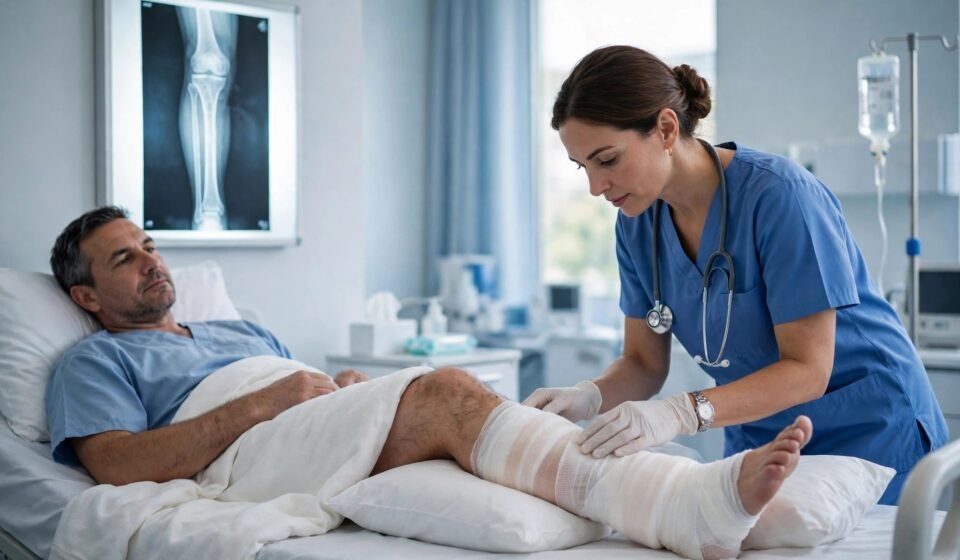

A sore leg after a fall is easy to brush off. Most bumps and bruises heal on their own. Yet sometimes the pain does not fade. Instead, it grows worse over days, the skin turns hot and red, and a fever sets in. That pattern can mean the bone itself has an infection — a condition doctors call osteomyelitis. And in rare cases, a bone infection can spill into the bloodstream and trigger sepsis.
In short, osteomyelitis is an infection of the bone. Germs can reach a bone in three ways: through the blood, from infected tissue nearby, or through a wound. A broken bone or surgery can also let them in. Most bone infections clear up with antibiotics when they are caught early. Left untreated, however, the infection can damage the bone for good. In rare cases it can also lead to sepsis, the body’s life-threatening reaction to infection. Our pillar guide, Septosis: Definitive Guide to Understanding, Recognising & Managing Sepsis, explains the condition in plain English.
Please note: this article offers general information only. It cannot diagnose you or replace medical advice. A painful, hot, swollen area over a bone needs urgent help — especially if you also feel seriously unwell. The same applies if you notice any of the warning signs listed below. Call 999 or go to A&E, and say that you have a bone infection and suspect sepsis.
What Is Osteomyelitis?
The NHS describes osteomyelitis as a painful bone infection. It usually goes away if doctors treat it early with antibiotics. However, it can cause serious long-term problems if doctors do not treat it. The infection most often affects the legs. It can also affect the spine, arms and hips.
Bone infections need long treatment because the infection sits deep inside the bone. You usually have to take antibiotics for four to six weeks. In severe cases, the course can last up to twelve weeks. As a result, an early diagnosis matters a great deal: the sooner treatment starts, the simpler it tends to be.
If doctors do not treat a bone infection quickly, it can cause lasting damage. The infection can destroy bone tissue, and it can also spread to a nearby joint. In the most serious cases, germs escape from the bone into the bloodstream. When that happens, the body’s immune system can overreact — and that overreaction is sepsis.
How a Bone Infection Can Reach the Bloodstream
Germs do not appear in a bone from nowhere. In fact, they arrive by one of three routes. Each route tells you something about who is most at risk.
Through the bloodstream
Sometimes an infection in another part of the body sends germs travelling in the blood. For instance, germs from a chest, urine or skin infection can travel in the blood. They can then settle in a weak spot in a bone. Children may also develop a bone infection after a chest infection or chickenpox. In this way, a bone infection can be the second stop on a journey that started somewhere else entirely.
From infected tissue nearby
A bone infection can also spread outwards from the tissue around it. A deep skin infection, an infected wound or a diabetic foot ulcer can reach the bone underneath. This route is common in the feet of people with diabetes. There, a small sore can hide under numb skin and deepen unseen.
Through a wound, a break or surgery
Finally, germs can enter a bone directly. A broken bone, a deep cut or a puncture wound can carry them in. The same is true of an operation on a bone. A metal implant, such as an artificial hip or screws that hold a broken bone together, can also let germs in. That is why surgeons take such care to keep operating areas sterile. It is also why a wound after bone surgery deserves close attention.
Who Is Most at Risk
In fact, anyone can develop osteomyelitis, the NHS says. Yet some people face a much higher risk than others, and the groups below account for most cases.
- Diabetes, especially with a foot ulcer. Poorly controlled diabetes can damage feeling in the feet, so small cuts go unnoticed and can become infected. Nerve damage and poor blood flow, both common diabetes complications, also make foot ulcers slower to heal.
- Poor circulation. When blood flow to the legs and feet is reduced, the body finds it harder to fight infection. Wounds also heal more slowly. This often goes hand in hand with diabetes.
- Recent surgery or an implant. Operations on bones and joints, and metal implants such as artificial hips or screws, give germs a direct route in.
- A weakened immune system. Chemotherapy and conditions such as HIV make it harder for the body to hold an infection in check.
- A broken bone or a deep wound. Open fractures and puncture wounds can carry germs deep inside the body.
- Children. Young children can develop a bone infection after a chest infection or chickenpox. They may show it as a limp, or by refusing to use an arm or leg.
Having one of these risk factors does not mean a bone infection is certain. However, it means that bone pain with a fever deserves a quicker trip to the doctor. See a doctor sooner about swelling or redness as well. Our guide to Sepsis and Diabetes: Why Diabetes Raises the Risk explains the diabetes link in more detail. Meanwhile, Sepsis After Surgery: Signs to Watch For After an Operation covers the signs to watch for after an operation.
Warning Signs That a Bone Infection Is Turning Serious
A bone infection usually announces itself clearly. The NHS lists severe pain as the most common sign. It most often affects the legs, although it can strike any bone. The other signs to watch for are:
- Swelling of the affected area
- A feeling of warmth over the area
- Redness of the skin, which may be harder to see on black or brown skin
- A limp, which is more common in children
- A high temperature
Those signs alone are reason to ask for an urgent GP appointment or contact NHS 111. The NHS advises seeking urgent help in three situations. The first is pain, swelling, redness and warmth over an area of bone. The second is a very high temperature with a feeling of being generally unwell. The third is symptoms that have come back after a previous bone infection. Young children may simply refuse to use an arm or leg and seem irritable, sometimes without a high temperature at all.
When Sepsis Signs Appear
The picture changes when the infection starts to affect the whole body. The CDC lists several signs of sepsis. They include clammy or sweaty skin, confusion or disorientation, and extreme pain or discomfort. Fever, shivering or feeling very cold are also signs, along with a high heart rate or weak pulse and shortness of breath. Sepsis Alliance sums them up with the word TIME. T stands for Temperature, higher or lower than normal. I stands for Infection, or signs of an infection. M stands for Mental decline, such as confusion or sleepiness. E stands for Extremely ill — severe pain, or a feeling that something is seriously wrong.
If any of those sepsis signs appear alongside a bone infection, do not wait for a routine appointment. Call 999 or go to A&E straight away. Tell them you have a bone infection and suspect sepsis. Sepsis is a medical emergency, and every hour counts.
How Doctors Diagnose It
First, diagnosis starts with a GP appointment. The GP will examine the painful area and ask about recent injuries, operations and infections. A blood test can show signs of infection. Doctors may also send you to hospital for scans — an X-ray, a CT scan or an MRI scan. In some cases, doctors take a biopsy. That means doctors take a small sample of fluid from the bone and send it for testing.
In particular, the biopsy matters because it tells doctors exactly which germ is causing the infection. That information decides which antibiotic will work best, rather than guessing. If doctors also suspect sepsis, they run further tests to check how the infection is affecting the body. Our guide How Is Sepsis Diagnosed? Tests, Scores and What Doctors Look For explains those tests in plain English.
NICE guidance tells clinicians to ask one simple question: “could this be sepsis?” They should ask it whenever a patient shows signs that suggest an infection. As a result, sepsis can be caught early, before organs start to fail.
Treatment: Antibiotics, Surgery and Sepsis Care
Treatment for a bone infection depends on how far it has spread and whether sepsis has developed. For example, most people need antibiotics, some need surgery, and a few need both plus intensive care.
Antibiotics first
Antibiotics are the main treatment. You may need treatment in hospital, or you might be able to take antibiotics at home. You will usually take them for four to six weeks. In severe cases, treatment can last up to twelve weeks. It is important to finish the course even if you start to feel better. The NHS notes that fast treatment pays off. If doctors treat the infection within three to five days of it starting, it often clears up completely. Painkillers can ease the pain, and a splint can rest a long bone such as an arm or leg.
When surgery is needed
You will usually need an operation in three situations. The first is a build-up of pus (an abscess) in the bone, which surgeons need to drain. The second is when the infection presses against something else, such as the spinal cord. The third is when the infection has lasted a long time and damaged the bone. Surgeons remove the damaged part of the bone, a step called debridement. Surgeons may need to rebuild the empty space left behind, and sometimes patients need more than one operation. Surgeons might use muscle and skin from another part of the body to repair the area.
If sepsis develops as well
If sepsis develops alongside the bone infection, doctors treat both at the same time. In hospital, that means antibiotics given quickly. Guidelines urge them within the first hour when septic shock is likely. Fluids through a drip, oxygen if you struggle to breathe, and close monitoring follow — sometimes in intensive care. Our guide Sepsis Treatment: How Sepsis Is Treated in Hospital explains each step of hospital sepsis care.
Recovery and Outlook
Overall, the outlook is best when doctors catch a bone infection early. Treatment within the first few days often clears the infection completely, and most people recover well. When treatment starts late, or when you need surgery, recovery takes longer. Long antibiotic courses, follow-up scans and check-ups are a normal part of getting better.
Some people face a slower road. A bone infection that has damaged the bone can take months to heal. A small number of people need further operations. If sepsis was part of the illness, recovery can take longer still. Tiredness and weakness can linger for weeks or months after the infection has gone.
The key point is simple: a bone infection that doctors treat early is usually a short illness. The same infection left alone can become a long one. That gap is why you should never ignore bone pain with a fever.
How to Lower Your Risk
You cannot remove every risk, but a few habits make a bone infection much less likely.
- Treat cuts and wounds promptly. Clean them, cover them, and watch for spreading redness or warmth.
- Look after your feet if you have diabetes. Check them every day, even if they feel fine, and get any cut, blister or sore seen quickly.
- Tell your doctor about any implant or recent bone surgery if a new pain or fever appears.
- Get an infected wound or a painful, swollen joint checked early rather than waiting to see if it settles.
- Keep diabetes well controlled, since steady blood sugar protects both the nerves and the blood flow in the feet.
Above all, act on bone pain that comes with a fever. It is the one symptom that separates a bone infection from an ordinary ache. It is also the one that should send you to the doctor the same day.
Frequently Asked Questions
Can a bone infection cause sepsis?
Yes, although it is rare. A bone infection causes sepsis when germs escape from the bone into the bloodstream and the body’s immune system overreacts. Any infection can trigger sepsis in this way. That is why a bone infection with a fever and a feeling of being seriously unwell needs urgent care.
How fast can a bone infection turn into sepsis?
In short, there is no fixed timetable. A bone infection can build slowly over days or weeks, and it may cause only local pain at first. Once sepsis starts, however, it can worsen quickly — sometimes over a matter of hours. That speed is why doctors treat suspected sepsis as an emergency. For the same reason, you should not wait to see whether things improve on their own.
Is osteomyelitis curable?
Often, yes. When treatment starts within three to five days, the infection often clears up completely. A long-standing infection is harder to cure. It may need surgery to remove damaged bone, plus a long course of antibiotics. A small number of people need more than one operation before the infection is gone.
How long do antibiotics take?
Usually four to six weeks, and up to twelve weeks for a severe infection. Some of that treatment may be in hospital, through a drip, and some may be tablets at home. Always finish the full course, even if you feel better — stopping early can let the infection come back.
When should I seek emergency help?
Call 999 or go to A&E if you have bone pain with a fever and feel seriously unwell. Do the same if you notice sepsis signs, such as confusion, shortness of breath, clammy skin or a fast heartbeat. A painful, hot, swollen area over a bone still needs same-day care. Ask for an urgent GP appointment, or contact NHS 111.
Final Verdict
A bone infection is uncommon, but it is not a condition to wait out. Caught early, it usually clears up with antibiotics and life goes back to normal. Caught late, it can damage bone, need surgery, and in rare cases lead to sepsis. So treat bone pain with a fever as urgent. Get it checked the same day, and you give yourself the best chance of a short, simple recovery.
Related Articles
- Septosis: Definitive Guide to Understanding, Recognising & Managing Sepsis
- Sepsis From a Tooth Infection (Dental Abscess)
- Sepsis and Diabetes: Why Diabetes Raises the Risk
- Sepsis After Surgery: Signs to Watch For After an Operation
- Sepsis From a Wound Infection: Signs, Emergency Action and Prevention
- How Is Sepsis Diagnosed? Tests, Scores and What Doctors Look For