
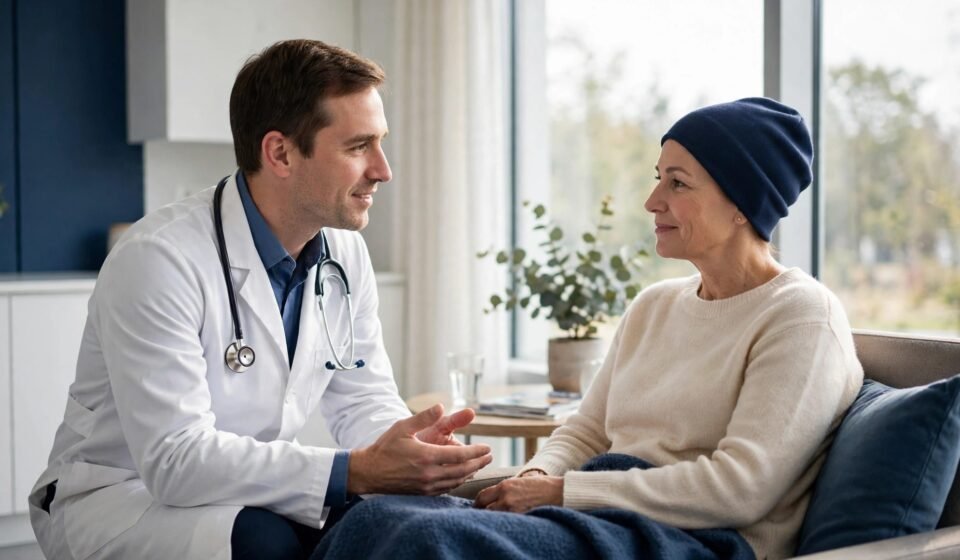

Cancer changes the body in many ways. It can also change how well the body fights infection. For that reason, people with cancer face a much higher risk of sepsis than the general public. Sepsis is a life-threatening emergency. It happens when the body’s response to an infection starts to damage its own tissues and organs. When it strikes someone whose defences are already low, it can move very fast.
In short, cancer and its treatments can weaken the immune system. Chemotherapy, in particular, can wipe out the white blood cells that fight infection. A small infection can then spread and trigger sepsis. Our pillar guide, Septosis: Definitive Guide to Understanding, Recognising & Managing Sepsis, explains the condition itself in more depth.
Please note: this article offers general information only, and it cannot diagnose you or replace medical advice. If you have cancer and you develop a fever during treatment, treat it as an emergency. Call your cancer team or 999 straight away. In the United States, call 911. Tell them you have cancer, you are on treatment, and you fear sepsis.
Why Cancer Raises the Risk of Sepsis
The World Health Organization (WHO) describes sepsis as a life-threatening condition. It arises when the body’s response to an infection injures its own tissues and organs. If doctors miss it early or treat it late, it can lead to septic shock, multiple organ failure and death. The WHO lists people with weakened immune systems, including people with cancer, among the groups at higher risk.
Cancer raises the risk in two ways at once. First, the disease itself can weaken the body’s defences. Some cancers, such as leukaemia and lymphoma, grow in the bone marrow or the lymph system, which are the very places where infection-fighting cells are made. Secondly, the treatments used to fight cancer can suppress the immune system still further. Chemotherapy, radiotherapy and stem cell transplants all fall into this group.
The scale of the added risk is striking. Sepsis Alliance’s training for health professionals explains that cancer is the most common condition found alongside sepsis. The presence of any type of cancer increases the risk of developing sepsis ten-fold. What is more, a sepsis diagnosis in a cancer patient increases the risk of death by two to three times.
The numbers behind sepsis as a whole are sobering too. The WHO reports that sepsis affected an estimated 48.9 million people in a year. It caused 11 million deaths worldwide, about 20 percent of all deaths globally. In the United States, the CDC reports that about 1.7 million adults develop sepsis each year. At least 350,000 die during their hospital stay or leave hospital for hospice care.
Neutropenia: The Key Danger
The biggest reason cancer patients develop sepsis is a condition called neutropenia. Neutrophils are a type of white blood cell, and the body’s first line of defence against bacterial infection. Neutropenia means the number of neutrophils in the blood has fallen too low. When that happens, the body cannot fight off germs in the usual way.
Chemotherapy causes neutropenia because it works by killing fast-growing cells. Sadly, it cannot tell the difference between cancer cells and healthy fast-growing cells. The CDC explains that some types of chemotherapy also kill infection-fighting white blood cells. As a result, a person receiving chemotherapy is at risk of infection during treatment. The CDC adds that neutropenia occurs in about half of all people with cancer who receive chemotherapy.
Timing matters: the CDC advises patients to find out from their doctor when their white blood cell count is likely to be lowest. This usually occurs between 7 and 12 days after each chemotherapy dose, and it may last as long as a week. During that window, the risk of infection is at its highest. A fever at that point is a warning sign, not a side effect to wait out.
What Is Neutropenic Sepsis?
When a person with neutropenia develops an infection that leads to sepsis, doctors call it neutropenic sepsis. Sepsis Alliance describes it simply as sepsis related to chemotherapy and other cancer treatments. It is a medical emergency. NICE defines it as a neutrophil count of 0.5 × 10⁹ per litre or lower, together with a temperature of 38°C or higher, or other signs of significant sepsis.
One feature makes neutropenic sepsis easy to miss. Because the immune system is so weak, the usual signs of infection may be faint or absent. There may be no redness around a wound, no swelling and no pus. A fever may be the only sign. In some people, there is not even a fever, especially if they take steroids or paracetamol. That is why cancer teams tell patients to report any fever at once, however well they feel.
Which Cancers and Treatments Carry the Highest Risk
Not every cancer carries the same risk. Blood cancers carry the highest risk of all. Leukaemia, lymphoma and myeloma all affect the bone marrow or the immune system directly. They can lower white blood cell counts even before treatment begins. They are also more likely to need long courses of chemotherapy and stem cell transplants.
Solid tumours carry a lower risk, but the risk is still real. Chemotherapy for breast, lung, bowel or other solid cancers can also cause neutropenia. The risk rises with the strength of the chemotherapy and the number of drugs used together. Older patients face a higher risk too. The CDC lists adults aged 65 or older among the groups at higher risk of sepsis, and older people are more likely to have other long-term conditions as well.
Treatments That Weaken Immunity
Chemotherapy is the treatment most often linked to sepsis, but it is not the only one. Radiotherapy can lower white blood cell counts when it is given over a large area of the body or together with chemotherapy. Stem cell and bone marrow transplants wipe out the immune system almost completely for a time, so patients stay in hospital under close watch until their counts recover. Some newer treatments, such as immunotherapy and targeted drugs, can also affect the immune system in different ways.
Other factors add to the risk. A central line, which is a tube placed in a large vein to deliver chemotherapy, gives germs a direct route into the bloodstream. Surgery can leave wounds that become infected. Poor nutrition, which is common during cancer treatment, can also slow healing and weaken defences. Our article Sepsis After Surgery: Signs to Watch For After an Operation explains the risk after an operation in full.
Warning Signs to Watch For
Sepsis can develop quickly in a cancer patient, sometimes within hours. Knowing the signs in advance can save a life. The most important sign during chemotherapy is a fever. The CDC states plainly that a fever during chemotherapy is a medical emergency. Call your doctor right away if you have a temperature of 100.4°F (38°C) or higher. Do not wait until morning, and do not try to bring the fever down with paracetamol and hope for the best.
Other signs can appear alongside a fever, or sometimes on their own. The NHS lists the common symptoms of sepsis in adults. They include confusion or slurred speech, uncontrollable shivering, muscle pain and difficulty breathing. It also lists not peeing all day, or peeing very little in the past 18 hours, as a sepsis symptom. NHS guidance for cancer patients adds more signs to watch for: a sore throat, diarrhoea, a cough or shortness of breath, burning when you pass urine, and a general feeling of being unwell.
Some signs are easy to dismiss during cancer treatment. Tiredness, for example, is common after chemotherapy. Yet extreme tiredness, dizziness or confusion can also be early signs of sepsis. A racing heartbeat, fast breathing, cold and clammy skin, or blotchy skin can also point to sepsis. If you notice any of these signs, seek help at once. Our guide Early Signs of Sepsis: The First Symptoms You Should Never Ignore lists the wider sepsis signs in full.
Do not wait to see if these signs pass. If you have cancer and you develop a fever or any sign of sepsis, call 999 or go straight to A&E. In the United States, call 911. Tell the team that you have cancer, that you are receiving chemotherapy or another treatment, and that you fear sepsis. That sentence helps doctors start the right treatment without delay. Fast treatment saves lives, and it matters even more when the immune system is already weak.
How Doctors Treat Sepsis in Cancer Patients
Treatment starts the moment doctors suspect sepsis. NHS guidance for cancer patients states that the most effective way to treat neutropenic sepsis is to recognise the signs early and give antibiotics within 60 minutes of arriving at hospital. Doctors take blood samples first, including a blood count to check neutrophil levels and blood cultures to find the germ. Then they start broad-spectrum antibiotics, which fight many types of bacteria at once. They switch to a more targeted antibiotic once the results come back. Our article Sepsis Treatment: How Sepsis Is Treated in Hospital describes this hospital care step by step.
Doctors also give fluids through a drip to support blood pressure and protect the organs. They give oxygen if breathing is difficult. If the infection has a clear source, such as an infected central line or an abscess, they treat that source directly. Sometimes they remove an infected line. Our article How Is Sepsis Diagnosed? Tests, Scores and What Doctors Look For explains the wider set of tests doctors use when they suspect sepsis.
Some patients need extra support. Doctors may give a medicine called G-CSF, which helps the bone marrow make white blood cells faster. They may also move the patient to a high-dependency unit or intensive care for close monitoring. If sepsis becomes severe, it can lead to septic shock, where blood pressure falls dangerously low. Our article Septic Shock: Symptoms, Treatment and Why Every Minute Counts explains that stage in full.
Sepsis can also delay cancer treatment. Doctors often pause chemotherapy until the infection clears and the white blood cell count recovers. That pause can be worrying, but treating the infection first is essential. Once the patient recovers, the cancer team reviews the plan and may adjust the dose or add protective medicines.
How to Lower Your Risk
You cannot remove the risk entirely. But several simple habits lower the chance of infection during cancer treatment. Most of them are the same steps that protect against sepsis in general, and our guide How to Prevent Sepsis explains them in full.
- Take your temperature every day during chemotherapy, and know the number to call if it reaches 38°C (100.4°F).
- Wash your hands often, and ask visitors to wash theirs before they come close.
- Keep cuts and wounds clean and covered, and tell your cancer team about any redness or swelling.
- Brush your teeth gently with a soft toothbrush, and use a mouthwash if your team advises it, to prevent mouth sores.
- Cook meat and eggs all the way through, and wash raw fruit and vegetables carefully.
- Avoid crowded places and contact with people who have an obvious infection while your white blood cell count is low.
- Stay up to date with the flu, pneumococcal and COVID-19 vaccines your team recommends.
- Ask “Could this infection be leading to sepsis?” whenever an infection is not improving.
None of these steps is difficult on its own. Together, they close the main routes by which infection reaches a person whose defences are low. The most important habit of all is the simplest: treat every fever during cancer treatment as an emergency and call for help at once.
Frequently Asked Questions
Can cancer itself cause sepsis?
Yes, in two ways. Some cancers weaken the immune system directly, especially blood cancers that affect the bone marrow. In addition, cancer treatments such as chemotherapy can lower white blood cell counts. Sepsis Alliance explains that having cancer and undergoing treatments such as chemotherapy can weaken the immune system, putting you at higher risk of an infection that could lead to sepsis.
How common is sepsis in cancer patients?
It is far more common than in the general public. Sepsis Alliance’s training for health professionals states that the presence of any type of cancer increases the risk of developing sepsis ten-fold. Cancer is also the most common condition found alongside sepsis. The CDC adds that neutropenia, the low white blood cell count that drives much of this risk, occurs in about half of all people with cancer who receive chemotherapy.
What temperature should I worry about during chemotherapy?
A temperature of 38°C (100.4°F) or higher is a medical emergency during chemotherapy. The CDC states this plainly and advises patients to call their doctor right away. Do not wait to see if the fever passes, and do not mask it with paracetamol. Your cancer team would rather hear from you early than treat a serious infection late.
Will sepsis delay my cancer treatment?
It often does, but only for a short time. Doctors usually pause chemotherapy until the infection clears and white blood cell counts recover. Once you are better, the team reviews your plan. They may adjust the dose or add protective medicines. Treating the infection first is essential, because continuing chemotherapy during sepsis would put you in greater danger.
Can I prevent sepsis while having cancer treatment?
You cannot prevent it completely, but you can lower the risk a great deal. The CDC advises patients to wash their hands often, cook food thoroughly, keep wounds clean, and avoid contact with people who have infections. Above all, take your temperature daily and call your cancer team at once if you develop a fever. Early antibiotics make the biggest difference of all.
Final Verdict
Sepsis is one of the most serious risks facing cancer patients. The disease itself can weaken the immune system, and chemotherapy can lower white blood cell counts still further. The risk of sepsis rises ten-fold with cancer, and the risk of death rises two to three times once sepsis develops. Yet most of that danger can be managed when patients and families know what to watch for.
The key message is simple. Take your temperature every day during treatment, and treat a fever of 38°C or higher as an emergency. Call your cancer team or 999 at once, and say that you have cancer and fear sepsis. Fast antibiotics save lives, and they matter most when the immune system is already weak.
Related Articles
- Septosis: Definitive Guide to Understanding, Recognising & Managing Sepsis
- Early Signs of Sepsis: The First Symptoms You Should Never Ignore
- Sepsis Treatment: How Sepsis Is Treated in Hospital
- How Is Sepsis Diagnosed? Tests, Scores and What Doctors Look For
- Septic Shock: Symptoms, Treatment and Why Every Minute Counts
- Sepsis After Surgery: Signs to Watch For After an Operation